





Privacy Policy: How BC Poker Handles Your Information in Canada
When you sit down at a poker table online, you’re trusting the platform with more than chips and cash – you’re trusting it with your personal information too. That’s something BC Poker doesn’t take lightly. This page walks through what’s collected, why it’s collected, and the choices Canadian players have when it comes to their own data, written in plain terms rather than dense legal filler. Register today and play knowing exactly how your details are handled from the first click.
What Personal Information Is Collected
Running a licensed poker room means some information has to be gathered, both when you sign up and while you’re actually playing. Here’s a breakdown of where most of it comes from.
Information Provided During Registration
Getting an account started usually just takes an email address or a phone number – whichever you’d rather use. Beyond that, extra details like ID documents might come into play later, but only if a promotion calls for basic verification or if something in your account activity looks off to the risk team.
Information Collected Automatically While You Play
Not everything comes from what you type in. A fair amount gets picked up automatically once you’re at the tables – things like device details, connection information, and general activity during play. That data feeds into the systems responsible for keeping games fair, including the checks that catch things like unauthorized assistance tools being used mid-hand.
How Your Data Is Used
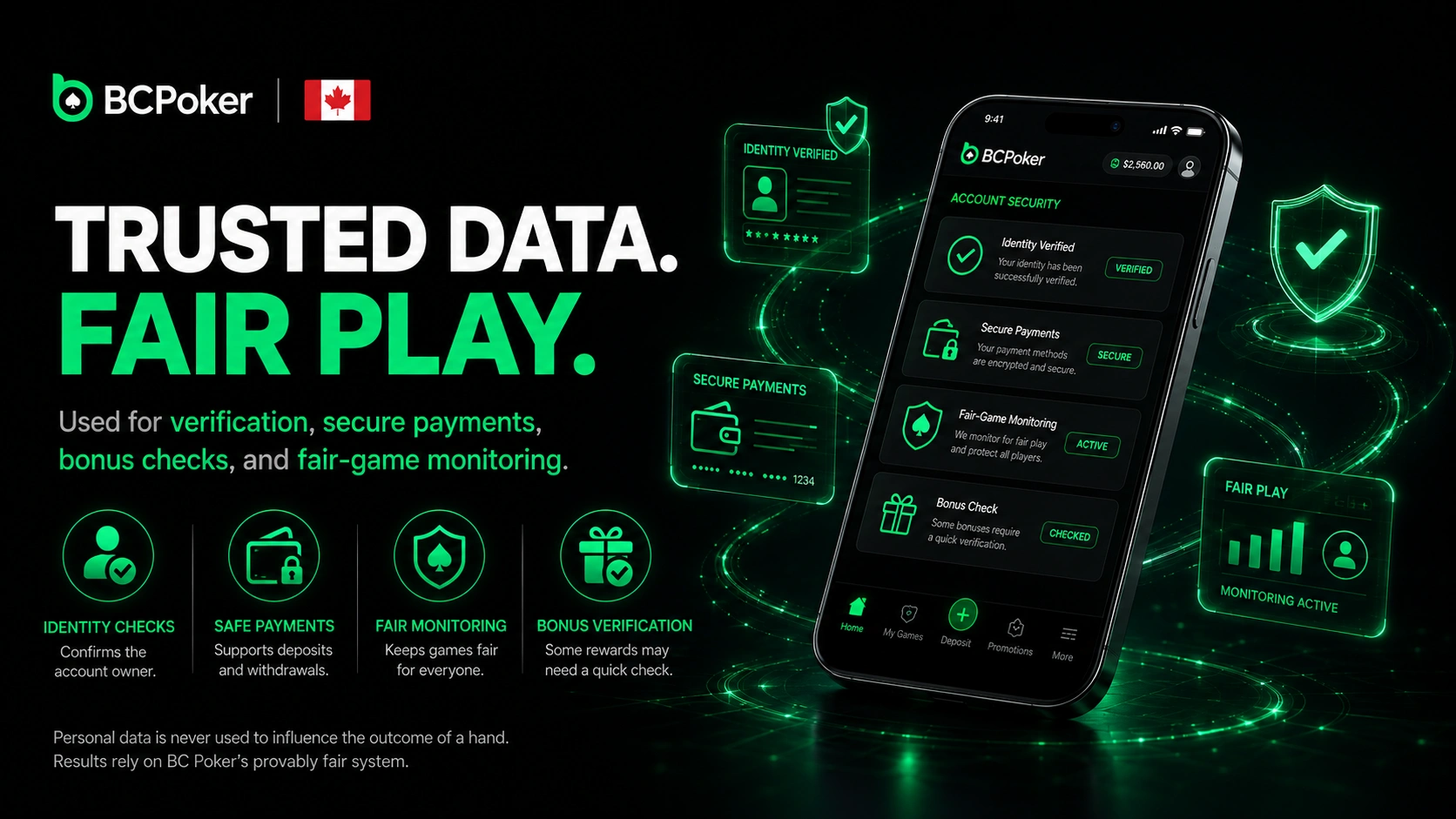
There’s no mystery behind why this information gets collected – it’s put to work in a few specific ways. It helps confirm who you are when verification is needed, keeps deposits and withdrawals processing correctly, and supports the ongoing monitoring that keeps games fair for everyone at the table. It also comes into play for promotions, since some bonuses ask for a quick verification step before they can be claimed. What it’s never used for is influencing how a hand plays out – that’s left entirely to the platform’s provably fair system.
Sharing Information with Third Parties
Some details do get passed along, but only to partners who genuinely need them to keep things running. Payment providers and e-wallet services need transaction information to move deposits and withdrawals along, whether that’s over crypto rails or a regional banking channel. If verification is required, a bit of documentation might also go to specialized compliance partners. What doesn’t happen is selling data to advertisers – any sharing that takes place stays limited to what’s actually needed for that service.
Data Security Measures
Account protection isn’t built around one single safeguard – it’s layered:
- Encryption – covers the login process from end to end.
- Two-Factor Authentication – an optional extra barrier beyond just a password.
- AI-driven monitoring – keeps an eye out for anything unusual before it turns into a real problem.
- Manual reviews – step in as a last check when something needs a closer look.
- Cold wallet storage – keeps most crypto holdings offline and out of reach of online threats.
Data Retention Practices
Information sticks around only as long as it actually needs to – whether that’s for keeping an account active, meeting obligations tied to the gaming license, or wrapping up an open support ticket. Once none of that applies anymore, the data gets cleared from active systems, in line with what’s expected of a licensed gaming operator.
Your Rights Over Your Personal Data as a Player in Canada
As a player in Canada, you’ve got a real say over the information tied to your account. That generally covers requesting a copy of what’s on file, asking for corrections if something’s wrong, and in most cases, closing the account entirely along with clearing the data once any remaining obligations are settled. The support team can walk you through exactly how to make any of these requests.


